Showing posts with label book report. Show all posts

Monday, June 07, 2010

About Books

I just ordered a copy of Jesus Manifesto. You can read a good review/commentary of the book here.

Marj just bought 2 copies of Alter, a book my friend Dave wrote.

Once I get time to read one or the other, I'll review them here.
Wednesday, February 03, 2010

So Beautiful

As I mentioned here, I've been listening to Leonard Sweet's book "So Beautiful". This book is really resonating with me. In it he talks about the DNA of the Church (not a particular church). He uses the term MRI which stands for Missional, Relational and Incarnational. This has been an interesting book. There is a promotional video below.

So Beautiful, by Leonard Sweet from David C. Cook on Vimeo.

Sunday, January 10, 2010

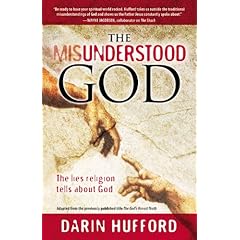
The Mis-Understood God

I've been reading an interesting book called "The Misunderstood God: The Lies Religion Tells About God" by Darin Hufford. His premise is that if God is Love (1 John 4:7-8) what does that mean.

As a result he looked at "The Love Chapter", 1 Cor 13 and asked if this is the definition of love what do we believe about God concerning each of these things.

Just as a refresher, 1 Cor 13:4-7 says:
Love is patient, love is kind. It does not envy, it does not boast, it is not proud. It does not dishonor others, it is not self-seeking, it is not easily angered, it keeps no record of wrongs. Love does not delight in evil but rejoices with the truth. It always protects, always trusts, always hopes, always perseveres.

This has caused me to examine what I have believed about some things. One review I read on Amazon suggested that this will be a book mis-quoted by others who haven't read it... His advise, and mine as well, is to pick it up for yourself and read it.

Monday, September 07, 2009

Book Review:"The Nature of the Atonement: Four Views"

I just finished reading "The Nature of the Atonement: Four Views". Not a book for light reading"Also, in spite of the attempt to be inclusive of as many general views as possible, it only described four specific views. They are:

Christus Victor: The Christus Victor is likely the oldest view of atonement, declaring Christ the victor over sin, death, etc. It encompasses other views such as Penal Substutionary Atonement and Healing Atonement as well. There are a couple of things I liked about the defense of this view. First is that it is one of the oldest views. There is a great deal to be said about looking at the traditions of the church fathers, especially when that tradition goes back to the first few centuries. Also, the fact that this also includes so many other views within the framework of belief.

Kaleidoscopic View: Similar to the Christus Victor view, it also includes other viewpoints within the framework of the view of atonement. What it does do, however, is to drop any particular view as the primary way of how things work. This is also attractive because as you read through the Bible, in both Testaments, there are differences in how atonement is described.

Penal Substitutionary View: The Penal Substitionary view is the viewpoint which seems most often taught within what is considered "evangelical" churches today. While the Bible does use the imagery of Christ paying the penalty for our sins, that is one of several different images used throughout the Bible. Things that struck me about this as I read through the book. The contributor for this viewpoint was absolutely sure his belief was the "primary" way God worked in the world and made this clear in rebuttals to nearly every other viewpoint. Some of the things mentioned about God seeking "Justice" to satisfy his "wrath" prompted word studies around those words.

This is probably my least favorite view because, at least the way this is taught today, does not paint God in a very kind and loving light and can be quite manipulative.

Healing View: This viewpoint is a lot harder to pin down and is one of what sounds like several in a larger category. Basically, it takes the scriptures that talks about Christ being our healer and extends that out into a view of sin as a disease and Christ's death as the anti-body for that disease. This is also an attractive view for me as it does paint God in a loving (not angry) light.


One thing I have been coming to the conclusion about with many of these issues such as calvinism, atonement, etc is that there is not necessarily one absolute way God works and, to believe and act as if there is does at least three things...
  • It limits your fellowship with other believers who do not hold those views because you start believing yourself "better" than them.
  • It causes you to look at scripture in frameworks that are not necessarily intended by God. As you see through the debate in this book, atonement can be looked at one way by one writer and differently elsewhere, even by the same writer. This is especially true when you look at Paul's writings.
  • It causes you to put God into a box of your creation. Remember, God is God (and I am not). God's ways are not our ways.
In his defense of the kaleidoscopic view of atonement, Joel Green mentions that each of these views spoke to people within their time. Is it time to adopt a different viewpoint as our "primary" or, to follow his lead and teach that no particular view is primary.


Thursday, May 21, 2009

From Eternity to Here - Part Three...

Part 3 of "From Eternity to Here" describes God's Eternal Purpose as starting a new species.   Frank reasons that Adam and Eve were a new species which gave birth to humans.  Christ, however, was completely man and completely God, a species not seen until that point in time.   As followers of Christ, we also become part of that new species.

I was a little sad as the book ended.  Only because it ended, however.  Frank finishes the book pointing us back to Christ through telling us about his experiences up to the point of realizing what God's eternal purpose really is.   This is going to be on my "to re-read" list.

Friday, May 08, 2009

From Eternity to Here - Part Two...

The second section of "From Eternity to Here" is about God looking for a place to dwell... a home.

In this section, we get a view of a God who has a throne in Heaven but wants to "dwell" on earth.   We see this in the Ark of the Covenant and David's Temple. 


Thursday, April 30, 2009

From Eternity to here


Recently, there have been a couple of books that have just made my jaw drop as I read the first couple of chapters.

The most recent was "From Eternity To Here" by Frank Viola subtitled "Rediscovering the ageless purpose of God".

Why did my jaw drop?  Because it struck such a chord.   In an interview about the book the author talks that, while we have Genesis 1 & 2 in the Bible, we usually start our faith at Genesis 3 with the fall (and often end prior to Revelation 21).  

The book is divided into 3 sections and I am still in the first section, explaining the love story, the romance of God with his church.  I'll have to keep you posted as I read.

Friday, October 17, 2008

More Reading


I have started a rather challenging book.... In fact, the name is "The Challenge of Jesus" by N. T. Wright.

It is quite good.  The source for the material is a series of lectures given at an InterVarsity conference in 1999.  The purpose of the book is to have you, the reader, realize the historical context that you read in the Bible.

I'll let you know more about it when it is finished.

The next one in the queue, however, has arrived.  I pre-ordered it as I have been reading the authors blog for some time.

The title, "The Blue Parakeet" sound like a mystery novel or something.  I read a bit of the first paragraph in the first chapter and he immediately had me hooked.  Why?  
When I was in High School, I went to a Christian camp in Muscatine, Iowa....
Why did that have me hooked?  I went to that camp, Spring Valley Bible Camp.

I did read a few more pages and it looks good.  Again, I'll let you know more as I finish reading.

Sunday, August 24, 2008

Reading, Reading, Reading...

I've been pretty silent about what I have been reading (actually I've been pretty quiet anyway).

Let me say first that the books on this list may not be for everyone.  They are deep, they don't necessarily follow traditional thought, although, they don't deviate as far as some would claim.  Lastly, they are all books I enjoyed and learned from.

Easily one of the longest titles, A Christianity Worth Believing: Hope-filled, Open-armed, Alive-and-well Faith for the Left Out, Left Behind, and Let Down in us All" by Doug Pagitt left me wanting more. Much of it is first hand stories from his life.

Much more deep, N. T. Wright's "What Saint Paul Really Said: Was Paul of Tarsus the Real Founder of Christianity?" was an interesting and deep glimpse into Paul's life and thought processes.  The take away from this for me is the cultural setting Paul wrote in.  Especially when most of the epistles start similar to "Paul, a bond-servant of Christ".  In the culture he is in, Paul was risking death as he just wrote -- "Jesus is Lord, Caesar is not".

Finally, N. T. Wright's "Following Jesus: Biblical Reflections on Discipleship" was amazing.  He took sermons he had preached which were high level summaries of several books in the New Testament and brought each one back to the Eucharist.

Currently I am reading "The Shack" by William P. Young which is a fictional account of his character's meeting God in three persons.  I have friends that can not say enough good about the book and others that didn't like it at all.  So far, I'm liking it.  The biggest problem is the hype around the book.

Tuesday, December 18, 2007

Reviews?

I promised book reviews, get ready...

I was reminded of where I left off a couple of Sundays ago. The current sermon series is called "Kingdom of God: Grip It & Rip It" which is on the first chapters in Matthew. The first message was on the Genealogy of Christ, specifically how there are lots of people of ill repute but reformed characters in that lineage, specifically, Rahab, Ruth and Tamar. At one point in the sermon, it was mentioned that not to many people like genealogy. This brought back memories of the book I read when I quit giving reviews.

It is called "A Frederick Family Album: Memories, Pictures and Documents of an Iowa Farm Family" and was written and published by my aunt, Elizabeth VanderSchaaf.

This is not, by far, the first book she has written. In fact, she has more than 14 books behind her now, many of them dealing with my family history but all of them dealing with family history from my side of her family or her husband's side.

This was a fun book to read, especially when it started talking about those I was familiar with, my Grandmother (who died when I was 5) and my Grandfather, my great uncle Elmer, my Dad and Aunt. Of course, many of her memories were of my grandparents, my Father and herself.

There is quite a bit of historical information in there as well. For instance, I skipped over some of the legal documents that were included.

Now to tie things back to the sermon. One of the things that she always said was you tell family history, no matter how bad things looked. The point made by the pastor that Sunday was that you could tell that the lineage of Christ was real because it was not whitewashed but showed the good and the bad.

Friday, November 23, 2007

Remiss - Book reviews

If you are wondering, I have not stopped reading. I just stopped mention that here!

I will fix that next month when I tell about the things I have been reading.

Friday, December 29, 2006

Plastic Jesus


Plastic Jesus, plastic Jesus
Riding on the dashboard of my car
I'm afraid He'll have to go
His magnets ruin my radio
And if I have a wreck He'll leave a scar

from Plastic Jesus

As I mentioned here, I was reading Eric Sandras' "Plastic Jesus: Exposing the Hollowness of Comfortable Christianity". The title and the chorus of the song above seem to expose the same thing. Too often, we have settled for much less than God would have us be and do.

"Plastic Jesus..." is published by NavPress.

In "Plastic Jesus...", Eric challenges us to quit being comfortable, raising lots of issues that affect me "where I live". For instance, it is quite easy for me to, once making the commitment to follow Christ, check that box off my to do list, continuing down the road to something else. This book challenges the reader to look beyond that initial commitment and determine what it really means to follow Christ.

I am putting this book back into my "to re-read" pile, actually, I am promoting this as a small group study for the group I am in.

Wednesday, December 20, 2006

The prodigal son...

I was mis-informed. Well maybe not as much mis-informed but just plain ignorant.

Back in February, I posted this. The title was "Todays Prodigal Sons".

What was I ignorant about? The meaning of the word prodigal. If you look up the word in dictionary.com, you will find out that prodigal means:

  1. wastefully or recklessly extravagant: prodigal expenditure.
  2. giving or yielding profusely; lavish (usually fol. by of or with): prodigal of smiles; prodigal with money.
  3. lavishly abundant; profuse: nature's prodigal resources.
  4. –noun- a person who spends, or has spent, his or her money or substance with wasteful extravagance; spendthrift.
Oddly enough, it doesn't really invalidate that post, it just puts it in a slightly different light.

Now, how did I find that out? I have been reading Plastic Jesus: Exposing the Hollowness of Comfortable Christianity. So far, it is an excellent book! If you'd like to read a few excerpts visit the authors blog here and here.

What I like about it so far is that it gets "into your business" but is still fun to read!

Friday, December 08, 2006

Done with the end...

I finally finished Great Tribulation--Past or Future?

It was sort of a long read but I did it because I have been curious about the Preterist and Futurist views of Revelation, The Great Tribulation and the end times.

Just to set the record straight, I think to adhere to either view takes faith. In this book, two "evangelicals" debate the issue.

The interesting thing about this debate was the way it was approached by the debaters. I the attitude I picked up in the book (and I could be very wrong about this) was arrogance. I felt the preterist had a much more humble spirit, at least at the start (and again, I could be quite wrong).

A word of warning about debate (not necessarily this one). The winning of a debate does not necessarily depend on the facts.

An example of this was a debate I was assigned to participate in while in High School. I was assigned the position that the world was flat. We won! Why? Because the opposing team was so convinced (and rightfully so of course) of their viewpoint, they forgot the rules of debate, that the newer (in this case, 15th Century view point) was considered true unless proven otherwise.

The format of the book is 2 chapters of explanation of the preterist view, 2 chapters explaining the futurist view then rebuttals.

Would I recommend it? If you are willing to trudge through a lot of linguistic mire, yes. If you hold one viewpoint or the other and wonder how in the world someone could think differently, yes. If, like me, you hold what a friend called a "pan" view (it will all pan out in the end), this one is probably not for you.

Monday, October 09, 2006

Book Review: The Myth of a Christian Nation

I can finally say that I am finished reading the book "The Myth of a Christian Nation" by Gregory A. Boyd.

It is a challenging book to read as it challenges a lot of our way of looking at America (or any other country for that matter). Rather than going into an in-depth review, I'll refer you to this review done by Vanguard Church.

Instead, I'll tell you my take-aways.
  • There are two kingdoms that we deal with, the "Kingdom Under Heaven" and the "Power over the Earth".
  • When people who should be more concerned with the "Kingdom Under" perspective become distracted or involved with the "Power Over" perspective, the "Kingdom Under" perspective is distorted or harmed.
  • We, as humans, are prone to tribalism, including being drawn to the "Power Over" viewpoint.
  • Jesus did not concern himself with the politics of this world.
  • If it doesn't "look like Jesus" than it is likely a "Power Over" rather than "Kingdom Under"
The thing that I do like about the book is that
  • It is not partisian, unlike the Randall Balmer book I recently read, in fact, throughout the book, you find very little out the political viewpoints of Boyd.
  • He keeps pointing you at Jesus.
I'm going to read it again soon as I think I need it to sink in further.

Friday, August 25, 2006

Book Review - "Thy Kingdom Come..."


After reading willzhead's "Disowning Conservative Politics Is Costly for an Evangelical Pastor" and subsequently posting this, I ordered both Randall Balmers "Thy Kingdom Come..." and Gregory A. Boyd's "Myth of a Christian Nation...". Yesterday, I finished reading "Thy Kingdom Come..." and was challenged.

As a sort of brief book report, let me say that my political leanings are somewhat to the left of many I associate with. Lately, especially since starting to blog, I have become increasingly concerned about how those with the same prinicple faith as mine are letting their political views and faith perspectives intermingle, to the point where we are pushing people away from the grace and redemption that Christ offers rather than drawing them nearer.

Let me start out by stating that I emailed Randall Balmer yesterday starting off with "... While I don't agree with everything in the book, it challenges my thoughts as well as confirms many of my feelings about the Church today. ...". His reply later yesterday included "... I'd be worried if you (or anyone else) agreed with everything I have to say...". If I read the book correctly, Randall is a democrat and approaches this book from that perspective.

His preface and conclusions are quite long and convicting. They are, however, well worth reading! Chapters are:
  1. Strange Bedfellows: The Abortion Myth, Homosexuality, and the Ruse of Selective Literalism
  2. Where Have All the Baptists Gone? Roy's Rock, Roger Williams, and the First Ammendment
  3. Deconstructing Democracy: School Vouchers, Homeschooling, and the War on Public Education
  4. Creationism by Design: The Religious Right's Quest for Intellectual Legitimacy
  5. Voices in the Wilderness: Evangelicals and the Environment
In this book, he attacks many "Sacred Cows", even a few of mine. On the other hand, I am not afraid to challenge my thoughts with a well thought out argument, especially when he approaches the argument from a Biblical perspective.

I would recommend this book if you fall into one of the following categories:
  • If you are willing to be challenged intellectually, politically or spiritually
  • If you are interested in seeing the Kingdom of God grow
  • If you are a political misfit (self-descriptive)
  • If you have been bothered by the seeming fusion of politics and church
Thanks Randall for writing this book!

P.S: I just started reading "Myth of a Christian Nation..." and am looking forward to writing about it as well.